


When you produce a song, you can earn money in three main ways:
- The first is an upfront fee, which is the guaranteed one-time payment you receive for studio sessions.
- The second is through "points," which work like percentages. If a song generates income, you can receive anywhere between 3% and 7% or more of the earnings.
- The third is publishing revenue, which you only receive if you actively contributed to writing the lyrics or the music.
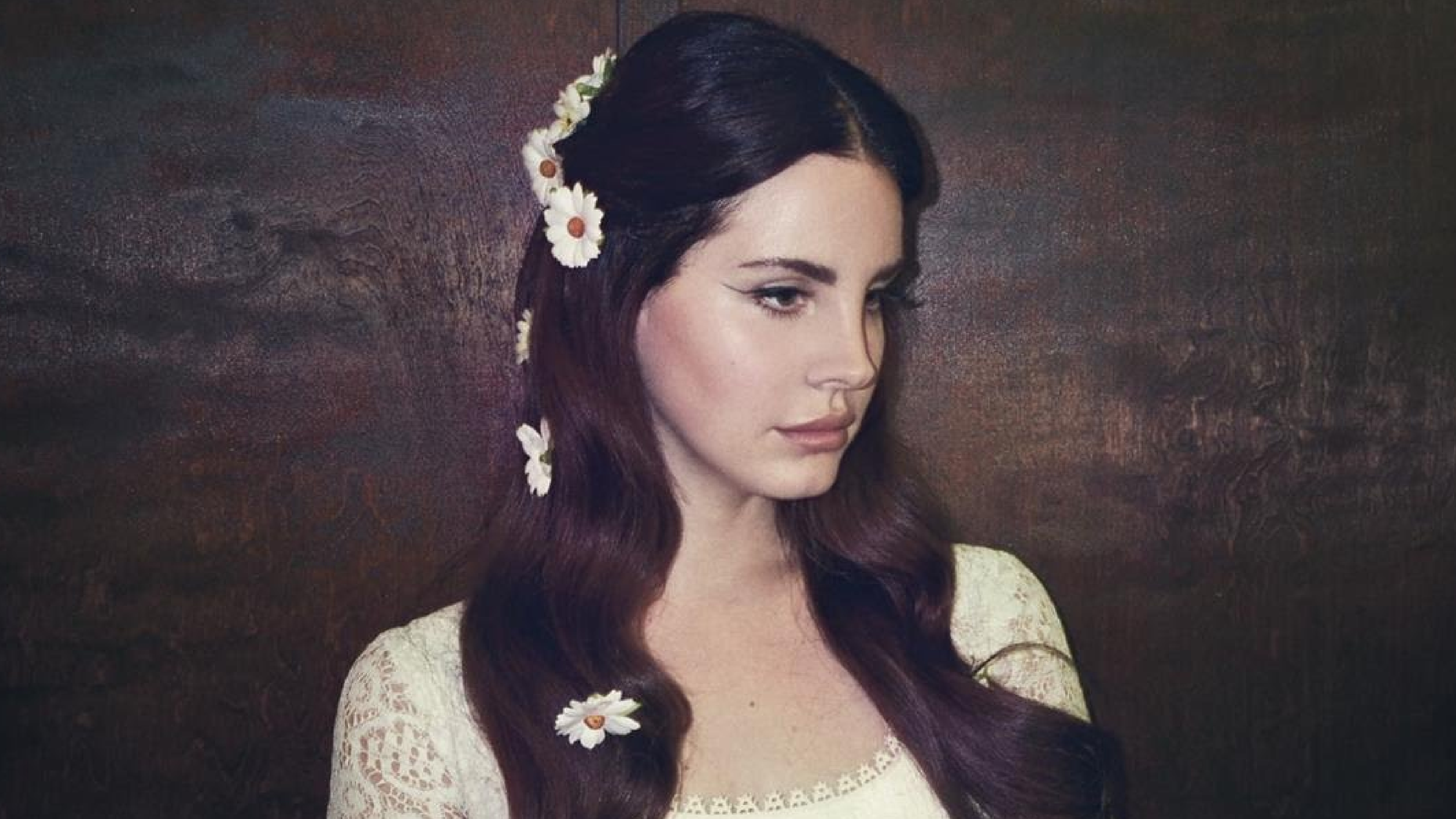
Though a few percentage points seem small, the producer royalties they generate can be worth a lot of money if the song does well or becomes a hit. To put this into perspective: producer royalties from Lana Del Rey's Honeymoon sold on our marketplace for $77,000, at 9.9 times what they earn annually.
Music producer royalties offer a durable income stream because they are linked to the recording itself, not to your relationship with the artist. For example, even if you never speak to the artist again or they sign with another label, quit, etc., you’ll continue earning on every stream and sale of the recording for as long as your contract specifies. In most contracts, this is the life of the master.
Keep reading to learn more about how producer royalties and points work, common reasons why your money might not be reaching you, and what it means to sell your producer royalties.
What Are Producer Points?
A producer point equals 1% of the master recording royalties. Producers usually get between 3 and 4 points, though the typical range in the industry is 2 to 5.
Points come out of the artist's royalty share, not the label's. For example, if the artist has a 20% royalty and gives you 4 points, they keep 16 and you get 4.
You start earning points from the first sale, but you only get paid after the label has covered the recording costs. Once that happens, you get paid for all sales made since the release.
The advantage is that a producer’s recoupment is handled differently from the artist's. Your payments start once recording costs are recouped, while the artist also has to pay back their advance, marketing, and video expenses. This is why producers often start getting paid before the artist recoups their costs.
How Many Points Should You Ask For? (And What’s Negotiable)
When negotiating producer points on a project, your bargaining power depends on how much you contributed in the studio. Let’s look at a few real-world examples.
If You're Producing an Artist’s Song
Say you were hired by an artist to work on a five-song project. You get paid a daily studio rate as well as a mixing fee. The artist has already written demos for the tracks and hires you to act as the backing band. Maybe you play the live instruments, engineer the session, mix the audio, and alter some chord progressions.
In this case, the daily studio rate covers your manual labor and time, but it doesn’t cover your contribution to the production. This is where points come in, and standard rates typically fall between 3% and 5%. That means 3% to 5% of what the recording earns, paid out of the artist's royalty share rather than off the top.
If You’re Co-Writing and Producing an Artist’s Song
Now, say a different artist comes to you with just a hook idea. You produce it and help them write the song from scratch. Your points might still fall within the 3-5% range, but you're also a co-writer on the composition, which entitles you to a share of the composition and the revenue it generates.
This means you receive a share of the song's royalties in addition to your points, and, unlike your points, this money isn't subject to recoupment.
If There's No Label Involved
If you’re working on a song with an independent artist, you typically get 15 to 25 percent of the net royalties because a label isn’t taking a cut.
This percentage is higher than what you would get from a major-label release, but it’s based on a smaller total. While a major-label release might bring in hundreds of thousands in royalties, an independent release may only make a few thousand. So, 20 percent of an independent project could actually be worth less than 3 points from a major-label project.
Check how the agreement defines "net." It usually refers to what's left after deductions such as recording costs, your fee, distribution costs, and sometimes marketing costs. The more items that are deducted, the smaller the amount your percentage is based on.
If You Produce and Write Your Own Music
If you make your own music, producer points aren’t relevant. These points allow producers to receive a share of royalties when they work for another artist. But if you're the artist, producer, and writer, there's no one else to split with. You own both the master and the composition.
This changes if you sign a record or publishing deal. In that case, a label pays you a royalty rate on the master instead. And if you sign with a publisher, they'll take a share of your composition income in exchange for administering and pitching your songs.
When Can You Ask for More Than 5 Points?
Producers with a track record of creating hit songs can negotiate more points, typically 6 or 7, sometimes more. Developing producers usually land at 3, while recognizable names often get 4 to 5.
If you're just starting out in your career, the fee can be used as leverage. For example, a producer who accepts $1,500 upfront instead of $3,000 might be able to negotiate an extra point or two on the backend.
How Points Turn Into Producer Royalties
Every time a song you produced is streamed, downloaded, purchased on vinyl or CD, or licensed for TV, film, or ads, the recording earns royalties. Your share of these royalties depends on your points — more points equal a larger royalty cut.
Say you negotiated 4 points and the recording earns $500,000. Since 4 points mean 4%, you're owed $20,000 in producer royalties, which the label pays out once recording costs are recouped, then on its regular accounting schedule.
If you didn’t work with a label, the artist will collect the money through their distributor and pay you your share according to your agreement.
How to Collect Your Producer Royalties
Now that you understand how producer points and royalties work, here’s how to make sure you’re collecting all the money you’re owed:
Get a Letter of Direction (If Needed)
Producer points are specified in the royalty agreement you signed with the artist. However, if a label is involved, that agreement alone won't ensure the money reaches you. You also need a Letter of Direction (LOD), signed by the artist, which instructs the label to pay your share directly to you.
Make sure you get the LOD in place when the agreement is signed, not after the song is released. Without one, your royalty payments will be sent to the artist, and you'll have to ask them to pay you out of pocket. If you worked with an independent artist, you don't need an LOD.
Register With SoundExchange
When the music you have producer credit on plays on digital radio, you earn digital performance royalties. Unlike the royalties your label collects for you, you have to collect these yourself through SoundExchange (the organization that U.S. law designates to collect royalties when recordings play on SiriusXM or internet radio stations like Pandora, where listeners don't choose the songs).
To collect your share, follow these steps:
- Register with SoundExchange yourself (it’s free). This is the step many producers miss because they assume a label or distributor already registered for them.
- Submit a separate Letter of Direction (LOD) signed by the featured artist. Your share comes from the artist's royalties, which SoundExchange pays directly to the artist. The LOD tells SoundExchange to send part of that money to you instead. Producers gained this right in 2018 under the AMP (Allocation for Music Producers) Act.
Keep in mind that these LODs aren't retroactive unless the form specifically states otherwise, so file early. Additionally, if the recording was made before November 1, 1995, you can claim a default 2% of the artist's SoundExchange royalties without the artist's signature, as long as you can show your contract and documented evidence of a 120-day effort to reach them.
If You Co-Wrote, Register the Composition
If you helped write a song as well as produce it, you can claim a share of the composition royalties. It's not only limited to lyrics or a vocal melody — if you created the beat, the chord progression, or the hook that the artist sang over, then you could be entitled to a writer's share.
These royalties don’t go through a label or SoundExchange, so you’ll need to complete two extra registrations to receive them:
- The first is a PRO (ASCAP, BMI, or SESAC). These organizations collect performance royalties whenever your song is played in public, such as on the radio, on TV, at venues, or through streaming services.
- The second is The MLC, which collects mechanical royalties each time your song is streamed or downloaded in the U.S.
Unlike producer points, composition royalties aren't subject to recoupment. Songwriters start earning money as soon as their song is streamed or broadcast. Their money is only held back if they received a publishing advance, which the publisher collects first.
Why Your Money Might Not Be Reaching You
If the song you contributed to is earning, but you’re not, it usually means your royalty income is going to someone else’s account or that you didn’t sign up with the right collector. It rarely means your money is actually missing. Here's where to check:
- Your money may be in the artist's account if a Letter of Direction (LOD) wasn't filed with the label or SoundExchange.
- The label might be holding your royalties if the project hasn’t recouped its recording costs yet. Alternatively, your next payment might not be due yet, as labels usually pay twice a year.
- If you co-wrote, your composition royalties may be in an unmatched pool due to a missing or incorrect registration. When the MLC launched in 2021, it received $424 million in unmatched royalties and continues to receive new ones every month.
- If you worked with an independent artist, they are responsible for paying you as outlined in your contract. Reach out to them directly if a payment is missing.
What Does It Mean to Sell Your Producer Royalties?
Labels typically pay twice a year, and standard contracts give them 60 to 90 days after each period ends to send your statement and payment. PROs typically pay quarterly, but there’s usually a delay between when your song is played and when you get paid for it. For example, ASCAP states that payments are made roughly 6 to 9 months after a performance.
Selling your producer royalties means trading future payments for a lump sum upfront. You only sell a portion of the income stream, not your work, and keep your copyright and credits. And you stay in complete control throughout the process, meaning you decide how much to sell (e.g., one song, an album, or your entire catalog, for a set term or the life of the rights) and the deal won’t close without your approval.
Buyers pay a multiple of what your royalties earn in a year, and past deals on our marketplace show the range:
- Producer royalties on 60 Travis Tritt recordings, earning $83,000 a year from country staples like "T-R-O-U-B-L-E" and "Anymore," sold for $780,000 at 9.4 times annual earnings.
- Producer royalties on 11 Meek Mill tracks, anchored by his Platinum hit "Ima Boss," sold for $160,000. The seller rejected six offers in the $120,000–$143,000 range and held firm on their price.
- Producer royalties on seven Justin Bieber recordings, including tracks from Purpose, earn about $5,200 a year and sold for $72,000, nearly 14x.
- Producer royalties from Taylor Swift's "Lavender Haze" drew 62 offers from 24 investors before selling for $65,000, at nearly 11.6x their annual earnings.
- On the smaller end, producer royalties on a single YoungBoy Never Broke Again track, "Red Eye," earned $14,848 in a year and sold for $27,000.
When Can Selling Make Sense?
Selling your producer royalties can make sense if:
- Your catalog has a few years of steady earnings behind it, since buyers pay for predictability, not potential.
- You can document your royalties with a signed agreement, LODs on file, and statements that show consistent earnings.
- You have a solid track record and need funding to launch a new project, purchase equipment, pay off debt, etc.
If your royalties check those boxes, you can see how much your catalog is worth (it’s free). Deals typically close about two weeks after you accept.
It might not make sense if your catalog is new, your earnings come from one recent viral spike, or you can't document your share yet. In this case, we recommend spending a year or two collecting statements first.
Frequently Asked Questions About Producer Royalties & Points
Here are answers to some of the most common questions about producer royalties:
What does "retroactive to record one" mean?
It means that once the label recoups its recording costs, you get paid on every copy sold since release, not just the sales that come after. Your royalties accrue continuously, and recoupment simply releases them. Make sure your agreement includes this clause.
Do producers get publishing royalties?
Only if you contributed to writing the song. Producing alone earns you points on the master, not publishing. But if you created the beat, the chord progression, or the hook, you could be entitled to a writer's share of the composition.
Is a "producer point" the same as a "publishing split"?
No. A producer point is 1% of the master recording royalties, while a publishing split is a percentage of the composition. One pays you for the recording, and the other pays you for the song (lyrics, melody, and chords).
What happens if there are multiple producers on a track?
The points still come out of the artist's royalty share, but each producer negotiates their own agreement based on their contribution. Make sure the splits are documented per track before release. Undocumented splits are one of the most common reasons producers don’t get paid.
Do I still get producer credit if I sell my royalties?
Yes. Selling transfers the income stream, not your credit or copyright. Your producer credit stays exactly as it is in the liner notes, streaming credits, and metadata. Buyers purchase a portion of the royalties a song earns, not the work itself.
The Bottom Line
Producer points may look small on paper, but a few points on the right song can out-earn your upfront fee many times over. And because they're tied to the recording, they keep paying for as long as your contract specifies.
Collecting them comes down to paperwork: points in your agreement, an LOD with the label, a SoundExchange registration, and a PRO if you co-wrote.
Once your royalties have a few years of history, they're an asset you can sell. You can find out what your catalog is worth for free, with no obligation to sell.





















.png)
