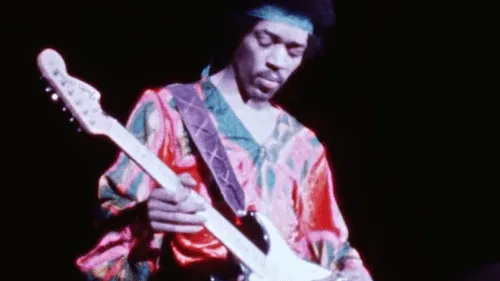

John Lennon passed away in 1980. His estate still earns between $12 and $15 million a year in music royalties. By any fair measure, he remains more productive than most living musicians.
That is the power of a music royalty.
Most people know that musicians earn money when their songs get played. What they don't know is the machinery behind it. The copyrights. The collection groups. The tracking systems that count billions of plays across hundreds of platforms. The checks that land in rights holders' mailboxes every quarter like clockwork. Once you see it clearly, it is one of the more elegant systems in modern business.
This guide is for people who want to see it clearly.
Whether you're a songwriter worried you're leaving money on the table, or an investor eyeing music royalties as an asset class — the same base applies. Understand what music royalties are, where they come from, and how they flow.
What Are Music Royalties?
A music royalty is a payment made to the owner of a music copyright whenever that copyright is used.
Simple enough. But "whenever that copyright is used" covers a lot of ground. Every stream on Spotify. Every spin on the radio. Every placement in a Netflix series. Every download. Every song played in a hotel lobby or a dentist's waiting room. Each of those uses triggers a payment. Most are small on their own. Added up across millions of plays and dozens of platforms, they build into something real. And they keep building year after year. No extra work required from the rights holder.
The global recorded music business took in roughly $28.6 billion in revenue in 2023. Nearly all of it flowed through royalty systems. That is not a niche market. That is an infrastructure — one that survived the death of the CD, the rise of piracy, and the full shift to streaming. The music royalty system has bent. It has never broken.
What makes music royalties different from most income streams is that they are passive. Once a song is written and recorded, the rights holder doesn't have to do another thing to keep earning. The song does the work. The system collects the money. The rights holder cashes the checks. A well-run royalty catalog is about as close to a true income machine as you can find in private markets.
Types of Music Royalties
Music earns several distinct royalty streams. Each is tied to a specific type of use and has its own rules. The main types:
- Mechanical royalties: paid when a song is copied, whether on a physical album, a digital download, or an on-demand stream. If someone pressed play and chose the song, a mechanical royalty was triggered.
- Recording royalties: earned by the owner of the sound recording whenever that specific recording is streamed or sold. This usually flows to the label or artist who owns the master.
- Publishing royalties: earned by the songwriter and their publisher from the underlying composition. That means the melody and the lyrics. It doesn't matter who recorded the song or how many times it's been covered.
- Micro-sync royalties: paid when music is used in user content on platforms like YouTube and TikTok. A fast-growing stream that most investors still undervalue.
- Digital download vs. streaming royalties: these are not the same thing. A download earns a one-time mechanical royalty. A stream earns recurring mechanical and performance royalties. Those are paid on every play, for as long as the song gets played.
- Streaming platform payouts: each platform pays at different rates. Spotify, Apple Music, Amazon, and Tidal all calculate per-stream pay differently. The mix matters when you're judging a catalog's income.
- Synchronization royalties: paid when music is licensed for use with visuals: films, TV shows, ads, video games. These are one-time, fully negotiated fees. One well-placed sync can dwarf years of streaming income.
- Performance royalties: collected whenever music is performed or broadcast in public. Streaming, radio, live venues — all covered. Performing Rights Organizations manage these. They pay out to registered songwriters and publishers.
Each stream flows from a different use. Each is collected by a different group. Each pays on a different schedule. The complexity is real. But it is manageable, once you know the structure.
Master vs. Composition Music Rights
Every song that gets released carries two distinct copyrights. This is the single most important thing to understand about how song royalties work.
- The composition copyright covers the song as written — the melody, the lyrics, the chord structure. It belongs to the songwriter or their publisher. Think of it as the blueprint.
- The sound recording copyright (called the "master") covers one specific recording of that song. It belongs to whoever funded and owns that recording. Usually that's a record label. But artists who record on their own own their own masters.
Here's why this matters. When you hear Eric Clapton's version of "Knocking on Heaven's Door," two rights holders get paid at the same time. Bob Dylan gets paid because he wrote the song and owns the composition. Whoever holds Clapton's master gets paid because of the recording. Same moment, same use, two royalty streams, two different owners.
The same logic applies when you're looking at a royalty investment. Buying a publishing interest means buying the composition-side income. Buying a recording interest means buying the master-side income. The source matters. The rates, collection paths, and long-term earnings of each differ in real ways.
Music Royalty Copyrights and Licensing
Copyright is the legal base that makes royalties possible. Without the right to control use, there is no way to collect payment. Without payment, there is no value.
A music copyright gives its owner control over how the work is copied, shared, and performed in public. It also covers how the work is turned into new works. Anyone who wants to use the music for business must either pay for a license or qualify under a narrow legal exception. Most business uses require a license. Most licenses require payment. That payment is the royalty.
The licensing system is more automatic than most people think. Streaming platforms work under blanket licenses they've negotiated with collection groups. These are not one-off deals with every rights holder. The result: a single song can earn royalty income from millions of plays across dozens of markets. Zero active work from the rights holder.
How Do Music Royalties Work?
Music royalties don't appear from nowhere. There is a process — from creation to the moment a check clears — and each step has its own logic. Here it is, laid out plainly.
Step 1 – Creation of the Song
It all starts with creation. A songwriter writes a melody and a lyric. Copyright protection attaches the moment the work is created and fixed in a form you can touch or play. Written down, recorded, saved to a hard drive — it doesn't matter. In the U.S., you don't need to register with the Copyright Office for the right to exist. Registration matters for enforcement. You can't sue for theft without it. But the economic right is present from the first moment the song exists.
From that moment on, the creator holds an exclusive right to control how the work is used. That right is the base of every royalty dollar that follows.
Step 2 – Registration and Rights Management
Creation gives you the right. Registration plugs it into the collection system. These are not the same thing. Confusing them costs rights holders real money.
For songwriters, registration means joining a Performing Rights Organization. In the U.S., that's ASCAP, BMI, or SESAC. PROs track public plays across thousands of venues, radio stations, and streaming platforms. They collect the licensing fees. They pay out to their members. A songwriter who hasn't registered with a PRO is not collecting performance royalties. Not some of them. None of them.
The recording-side version is SoundExchange. It collects digital performance royalties from internet radio, satellite radio (SiriusXM), and certain streaming services. It pays out to labels and artists.
Mechanical royalties from on-demand streaming flow through the Mechanical Licensing Collective (MLC). The MLC was created by the Music Modernization Act of 2018. Songs must be registered with the MLC to claim these earnings. Since the MLC launched in 2021, it has paid out hundreds of millions in royalties that had long gone unclaimed. That money sat dormant because rights holders hadn't registered their works properly.
Unregistered rights don't pile up waiting for you. After a set period, unclaimed royalties are given to other rights holders by formula. The cost of admin neglect is not a stern letter. It is the permanent loss of earned income.
Step 3 – Distribution and Licensing
Once a song is registered and the rights are in order, it needs to reach an audience. For most released music, this means going through a label (for the recording) and a publisher (for the composition). The label gets the recording onto streaming platforms and into stores. The publisher manages the composition rights and licenses the song for outside uses.
Licensing is where the money gets interesting. When a music supervisor for a major film or ad wants a specific song, they negotiate a sync license with the rights holder or their publisher. There is no set rate. Fees are fully negotiated. A well-placed song in a high-profile project can earn more in one deal than years of streaming income.
At Royalty Exchange, we discount sync income heavily in catalog valuations. It is irregular and hard to predict. What happens once may not happen again. But it is real money when it does. And it shows how many ways a single copyright can earn from one piece of creative work.
Step 4 – Royalty Tracking and Collection
Billions of plays happen every day. Someone has to track all of them. They have to match them to the right rights holders. And they have to send the right payment to each party.
PROs handle this through digital audio fingerprinting and blanket license deals with broadcasters and venues. Streaming platforms send play data directly to the MLC and PROs, so matching can happen at scale. SoundExchange gets usage data from digital radio services and checks it against its registry of rights holders.
The system is advanced. It is also not perfect. Royalties go unclaimed when registration data is missing. When song metadata is wrong. When a use happens in a country the rights holder isn't set up to collect from. Keep your registrations current. Check your earnings across all channels. Make sure your metadata is correct. This is not optional if you want to collect what you're owed.
Step 5 – Payment to Rights Holders
Royalties are paid on a set schedule — quarterly for most sources, monthly for some. The money flows from the music user to the collection group. From there it goes to the publisher or label. Then it flows to the songwriter or artist based on their contract splits.
Those splits are where deals live or die. A songwriter who signed a standard publishing deal in the 1980s may collect fifty cents on every dollar their composition earns. A modern self-published songwriter with a good publishing admin service might keep eighty-five cents or more. That thirty-five-cent gap compounds over decades. Across thousands of plays. Into a figure that is anything but small.
For investors who buy royalty interests, payment flows the same way. A royalty interest gives the investor the economic right of that ownership stake. They step into the seller's position. They get that share of ongoing royalty income, paid on the same schedule, run by the same groups. Exactly as if they had written the song themselves.
Step 6 – Selling or Investing in Royalties
This is where the story changes for investors.
Music royalties can be bought and sold like any other cash-flowing asset. A songwriter who owns the publishing rights to a valuable catalog owns something an investor might want to buy. Not the songs themselves — but the right to receive a set share of the income those songs earn. For as long as the copyright holds.
These deals are not new. You've read about big catalog buys — major publishers paying hundreds of millions for legacy catalogs. Those deals are built on the same logic as the deals that happen on Royalty Exchange every week. The structure is the same. The scale is different. The access, until recently, was limited to big institutions with hundreds of millions to spend.
Royalty Exchange changes that. Investors can buy songwriter royalties, recording royalties, and publishing interests in proven catalogs. For amounts that fit a real portfolio — not just a sovereign wealth fund. The asset class that was once available only to insiders is now genuinely open.
How Are Music Royalties Collected?
The collection system for music royalties is spread out by design. Different groups handle different royalty types. They serve different rights holders. They work under different legal rules. Here is who collects what, and for whom.
ASCAP, BMI, and SESAC
These companies collect public performance royalties for songwriters and publishers. They license radio stations, streaming services, venues, and every entity that plays music in public. They pay out the proceeds — minus their admin costs — to registered members. ASCAP and BMI have each paid out over $1 billion a year since 2017.
SoundExchange
SoundExchange collects digital performance royalties for recording artists and labels. Specifically from internet radio, satellite radio, and certain streaming services. One important and often-missed rule: SoundExchange pays recording artists even when they don't own their masters. Artists who signed their masters over to a label still collect 45% of SoundExchange payouts directly, by law. That carve-out was hard-won and worth knowing.
The Mechanical Licensing Collective (MLC)
MLC collects streaming mechanical royalties for songwriters and publishers. It covers on-demand platforms. The MLC was created by the Music Modernization Act of 2018. Before the MLC, streaming services were often chronically underpaying — or not paying at all. Ownership data was a mess. The MLC fixed the plumbing.
Record Labels
Record labels collect recording royalties from streaming platforms. They pay artists under the terms of their recording contracts — after recouping any outstanding advances. The phrase "after recouping advances" is doing a lot of work in that sentence. Many artists see nothing from their recording deals for years. When you buy a recording royalty interest, it's worth knowing what has already been taken out of it.
Music Publishers
Music publishers collect composition royalties from PROs and the MLC. They pay songwriters based on their publishing deals. The split is usually 50/50 between publisher and songwriter. Modern co-publishing deals and self-publishing have pushed that number in the songwriter's favor.
For investors who own royalty interests directly, the right organizations depend on what they own. A publishing royalty interest flows through the PRO and MLC. A recording royalty interest flows through SoundExchange and platform payments to the label. A full catalog buy might involve all of the above.
How Long Do Music Royalties Last?
This is the question that matters most to long-term investors. The answer: a very long time.
For songs written after January 1, 1978, copyright protection lasts for the life of the author plus an additional 70 years. Write a hit at 25, live to 75, and your heirs collect royalties until 2120. That is not a short-term asset. By the standards of any investment type, it is an extraordinarily long one.
For works made for hire, anonymous works, or works held by a company, the rules differ. Copyright lasts for 95 years from first publication — or 120 years from creation, whichever comes first. Pre-1978 works follow a different path. A song properly copyrighted before January 1, 1978 gets 95 years of protection from the date the copyright was first secured.
The real meaning for investors: the catalogs most worth buying are the ones that have already proved they can last. A catalog that has earned steady royalty income for fifteen or twenty years has shown it doesn't depend on one moment of cultural heat. Those are the catalogs with the longest runway left — often decades of protected earnings still ahead.
Most other investments have a set end date. A private equity fund runs seven to ten years. A real estate hold is finite. A music royalty, chosen well, can pay for a working lifetime. And leave something real for the next generation. That duration is one of the strongest arguments for music royalties as an asset class. It doesn't get enough attention.
Summary
Music royalties are one of the most elegant income machines in modern business. They are born from an act of creation. Copyright law enforces them. A network of groups collects them. They pay out on a set schedule. For the right catalog, that can go on for generations. They don't need active management to keep earning. They don't move with stock market cycles. They grow with music consumption — and global music use has grown every year for the past decade.
For songwriters and rights holders, understanding how royalties in music work is the difference between two very different outcomes. You either collect the full value of your creative work. Or you leave earned income on the table — permanently. For investors, music royalties offer something rare in modern markets. A cash-flowing asset with a long life. A clear income history. Built-in distance from public market swings.
Royalty Exchange is the marketplace where both sides of that deal come together. Artists and rights holders list their catalogs. Investors buy royalty interests through an open, competitive auction. More than $200 million in deals have closed through our platform. The asset class is real. The track record is there. The door is open.
Ready to invest? Browse our current catalog of available royalty listings →
Ready to sell? Get an offer for your music catalog →
Sources
- Forbes / Finance Monthly, "John Lennon Estate Earnings"
- IFPI, Global Music Report 2026
- Copyright Act of 1976, Title 17, U.S. Code
- U.S. Copyright Office, Copyright Basics (Circular 1)
- ASCAP, Membership & Registration / BMI, Membership & Registration
- Music Business Worldwide / Billboard, Sync Licensing Rates
- ASCAP, Annual Reports / BMI, Press Releases
- Digital Performance Right in Sound Recordings Act (DPRA) / DMCA, SoundExchange Royalty Distribution
- U.S. Copyright Office, Copyright Duration FAQ
- U.S. Copyright Office, Circular 15a / Royalty Exchange, Length of Ownership